AgentWorks vs Make: Visual Automation Meets AI Agents
By AgentWorks Team · AI agents for European teams
The team behind AgentWorks — building EU-compliant AI agents and multi-LLM workflows for European teams.
Reviewed July 6, 2026

TL;DR
Make is a mature visual automation tool for moving data between apps with explicit rules. AgentWorks offers a comparable visual workflow builder but makes AI agents, multi-LLM chat, grounded knowledge and an immutable EU audit trail native — so you can delegate judgement, not just connect apps, while keeping full traceability.
Make is one of the best-known visual automation tools: you drag modules onto a canvas and connect them into a scenario. AgentWorks starts from a different premise — the visual builder is there, but each step can be a reasoning AI agent with its own model, knowledge and audit trail.
Two different starting points
Make was built to move data between apps. Its scenario builder excels at deterministic plumbing: when a row appears in a spreadsheet, create a record in your CRM, then post to a channel. The logic is explicit, and you wire every branch yourself.
AgentWorks was built to put AI agents to work inside a business, with automation as one of several surfaces. The visual workflow builder lets you chain steps the same way, but a step is not just an API call — it can be an agent that reads a brief, searches your knowledge base, drafts a document and hands it to the next stage. You get 50+ pre-built agents from the Free plan, and on Pro you can build custom agents and design multi-step pipelines yourself.
The practical difference: in Make you encode every decision as a rule; in AgentWorks you can delegate judgement to an agent and keep the deterministic rules for the parts that must stay deterministic.
Where the AI actually lives
Make can call AI services as modules — you add an OpenAI or Anthropic module and pass a prompt. That works, but the model, the key, the retries and the cost tracking are yours to manage across every scenario.
In AgentWorks the models are native. Multi-LLM chat and every agent can use GPT-5, GPT-5 mini, Claude (Opus, Sonnet, Haiku), Gemini (Pro and Flash, up to 1M context) or Mistral Large, and you can switch models mid-conversation. An AUTO router sends each message to the cheapest model capable of the task, so you are not hard-coding a model choice into every step. Agents come with real tools out of the box: web search, cited Deep Research, code execution, image generation and access to your company knowledge — plus a live canvas that creates and exports Word, PowerPoint, Excel and PDF files you can open in Google Drive or OneDrive.
Knowledge and grounding
A Make scenario has no memory of your documents. If you want an AI step to reason over your content, you assemble and pass that context yourself.
AgentWorks includes knowledge and RAG as a first-class feature. Upload PDF, DOCX, TXT or CSV files, or connect URLs, Notion and Confluence; content is embedded with pgvector and answers come back with citations. When an answer is not in the knowledge base, the agent says "I don't know" rather than inventing one — a meaningful safeguard when automations act on the output. PII is masked at the gateway before anything reaches a model.
Governance, audit and EU data residency
This is where the platforms diverge most. Make gives you execution history and logs aimed at debugging scenarios. AgentWorks is built for European governance from the ground up.
Every agent carries a per-step risk classification. State-changing actions can require human-in-the-loop approval before they run. Every step is written to an immutable, append-only audit trail that you can export as CSV or JSON — useful when you need to show exactly what an automation did and why. AgentWorks is EU AI Act-ready (readiness, not a blanket compliance claim — your actual risk class depends on how you use it), runs on EU model endpoints where offered, and works under no-training, zero-retention model contracts. A DPA is available on request. If you need SSO/SAML, that sits on the Enterprise plan. You can read more on the trust page.
Scheduling, triggers and integrations
Both platforms are event-driven. Make is known for its deep catalogue of app connectors and polling triggers. AgentWorks runs pipelines on daily, weekly or monthly schedules (Pro and up) or via inbound webhooks, and connects to the tools most teams already use: Slack, Microsoft Teams, Gmail, Google Workspace, Google Drive, OneDrive, SharePoint, Salesforce, HubSpot, Pipedrive, Notion, Confluence, Jira, Asana, Monday, Calendly, GitHub, GitLab and Exact Online. On top of that there are MCP servers and a REST API with inbound webhook triggers, so you can wire AgentWorks into systems it does not connect to natively. See the full list on the integrations page.
The gap Make cannot easily close is not connector count — it is the combination of agents, grounded knowledge and an immutable audit trail in one governed platform.
Cost model
Make charges by operations: each module run consumes an operation from your plan quota. AgentWorks separates the platform subscription from model usage. Tokens are billed at cost plus 10% from a single transparent euro wallet, you see live per-run spend, and you can set budgets per organisation, team or user. Plans run from Free (€0 with a €5 one-time credit) through Pro (€39/month, €10 monthly balance included) and Team (€49/seat/month) to custom Enterprise. Full details are on the pricing page.
Summary: Make is a mature visual automation tool for moving data between apps with explicit rules. AgentWorks offers a comparable visual workflow builder but makes AI agents, multi-LLM chat, grounded knowledge and an immutable EU audit trail native — so you can delegate judgement, not just connect apps, while keeping full traceability.
Frequently asked questions
Is AgentWorks a direct replacement for Make?
Not exactly. Make is strongest at high-volume, rule-based data plumbing between many apps. AgentWorks overlaps on visual workflows and scheduling but is designed around governed AI agents, knowledge and audit trails. Many teams use it where reasoning, document generation or compliance matter more than raw connector count.
Can I use my own AI models with either tool?
In Make you add AI as external modules and manage keys and cost yourself. In AgentWorks the models are built in — GPT-5, Claude, Gemini and Mistral — with an AUTO router that picks the cheapest capable model and one wallet billed at cost plus 10%. Local and small models are available on the Enterprise plan.
How does AgentWorks handle compliance and auditing?
Every step is logged to an immutable, append-only audit trail you can export as CSV or JSON, each agent has a per-step risk class, and state-changing actions can require human approval. AgentWorks is EU AI Act-ready with EU data residency and no-training model contracts; your specific risk classification still depends on your use case.
About the author
AgentWorks Team · AI agents for European teams
AgentWorks is an AI agent platform purpose-built for European teams that need EU AI Act-ready governance, multi-LLM choice across OpenAI, Anthropic, Google and Mistral, and transparent per-token € pricing.
Read more about AgentWorksRelated articles
Read article: Building AI Agent Pipelines on a Visual Canvas 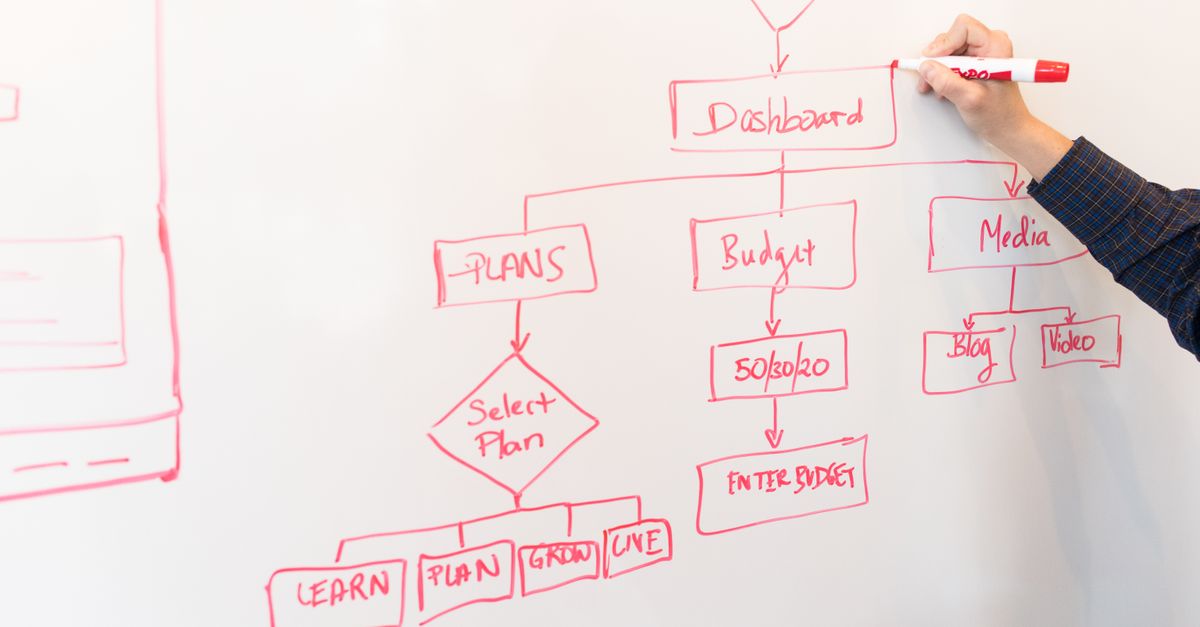 ProductJuly 6, 20266 min read
Building AI Agent Pipelines on a Visual Canvas
Chain research, draft, review & publish steps on a no-code canvas — with per-step logging, risk classes and human approval on state-changing actions.
Read more →Read article: Webhook-Triggered AI Agents: React to Real Events  ProductJuly 6, 20266 min read
Webhook-Triggered AI Agents: React to Real Events
Fire an AgentWorks agent pipeline from any inbound event using webhooks and the REST API, with governance and audit built in.
Read more →Read article: AI Agents vs ChatGPT: Why Work Needs More  ProductJuly 6, 20265 min read
AI Agents vs ChatGPT: Why Work Needs More
ChatGPT answers questions. AI agents act on them — with tools, company knowledge, scheduling, approvals, and audit trails. Here's the difference for real business work.
Read more →